Whether you’re releasing your first visual or your tenth, having a clear plan makes all the difference. These music video promotion budget tips will help you stretch every dollar — or get results with none at all. In addition, from DIY filming to paid social ads, there’s a strategy for every stage of your career. Let’s break it down.
What Is a Good Budget for a Music Video?
There’s no single right answer, but there are three realistic tiers most <a title="<a href="https://orionpromotion.com/independent-artists-2/" title="How <a href="https://orionpromotion.com/independent-artists-3/" title="How <a href="https://orionpromotion.com/?p=22404" title="Independent Artists vs Labels in 2026″>Independent Artists Can Grow Faster on Spotify in 2025″>Independent Artists Grow Without Labels”>Independent Artists vs Labels in 2026″ href=”https://orionpromotion.com/?p=22410″>independent artists fall into. However, these music video promotion budget tips apply at every level, so use them as a guide rather than a strict rule.
- $0 (DIY tier): Smartphone camera, natural lighting, one location, free editing software. This is totally viable for building an audience early on.
- $500–$1,500 (mid tier): Hire a local videographer, rent a simple set, use basic post-production tools. For example, this is the sweet spot for most indie artists.
- $10,000+ (professional tier): Full crew, multiple locations, color grading suite, and a dedicated promotion budget on top of production costs.
Note that production cost and promotion budget are two separate things. Many artists overspend on filming and have nothing left for distribution. As a result, you should allocate at least 30–40% of your total budget to promotion — not just production.
DIY Filming: Cut Production Costs Without Cutting Quality
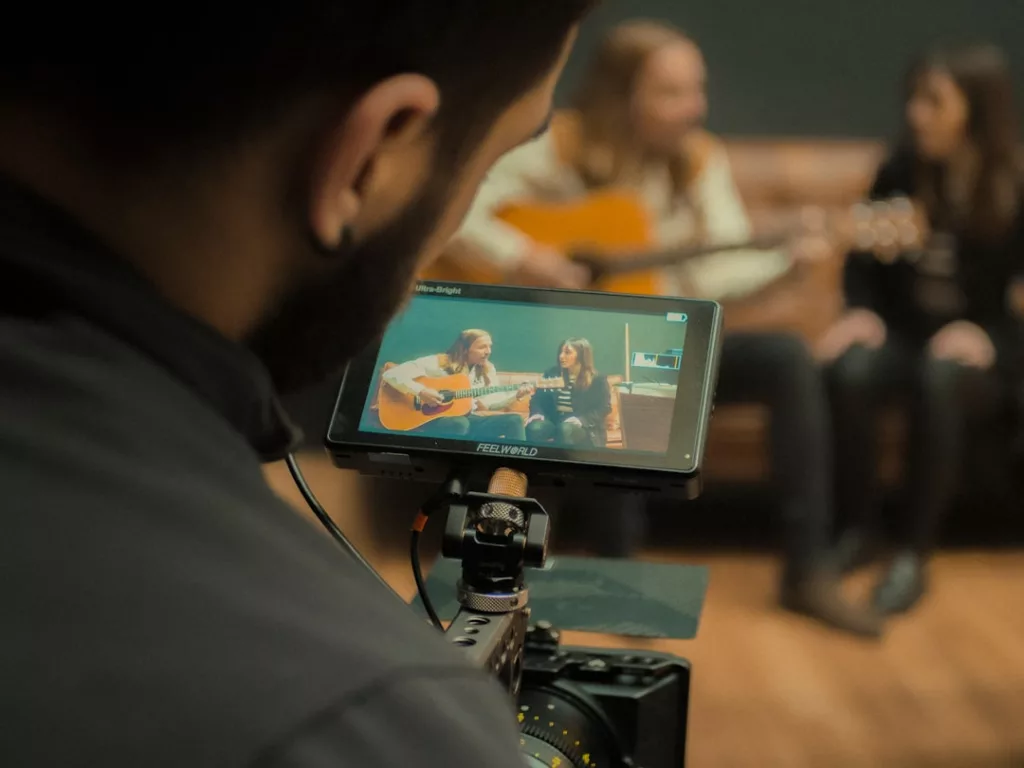
Modern smartphones shoot in 4K. You don’t need a $50,000 camera package to make something visually compelling. In fact, some of the most-viewed indie videos were shot on an iPhone in a single afternoon.
Practical DIY Tips
- Use natural light — shoot near a large window or outdoors during golden hour for a cinematic look.
- Choose one strong location rather than five mediocre ones. A single well-lit, interesting space beats scattered chaos.
- Use free editing tools like DaVinci Resolve for color grading and cuts. It’s professional-grade and completely free.
- For AI-assisted visuals, tools like Runway ML or Pika Labs can generate extra footage — useful for lyric videos or abstract visuals. However, use AI clips as accents, not the full video. Audiences still respond best to real human performance.
Saving on production means more money for promotion. Moreover, promotion is what actually drives streams. These music video promotion budget tips exist precisely because smart spending beats big spending every time. For a deeper look at how to get your music in front of listeners, see our guide on music distribution with Orion.
Music Video Promotion Budget Tips by Tier
Here’s how to think about spending at each level. These aren’t rigid rules, but they give you a realistic framework for applying the best music video promotion budget tips to your situation.
$0 Budget: Organic-Only Strategy
A zero budget doesn’t mean zero results. It means being smart with your time instead of your money. Focus on these channels:
- Blog and playlist outreach: Submit your video to music blogs, YouTube playlist curators, and independent radio shows. Services like Orion’s playlist pitching make this process faster. You can also learn more about how to pitch to playlist curators on our blog.
- Short-form clips: Cut 15–30 second clips for TikTok, Instagram Reels, and YouTube Shorts. Post consistently in the two weeks before and after release.
- Behind-the-scenes content: BTS posts, bloopers, and countdown stories build anticipation without spending a cent.
- Community engagement: Comment on posts in your genre niche. Build real relationships before asking for shares.
$500–$1,500 Budget: Paid Ads and Micro-Influencers
At this level, you can start testing paid promotion and small influencer partnerships. Allocate your budget roughly like this:
- $200–$400 on Meta Ads (Facebook/Instagram): Run video view campaigns at $5–$10/day. Target by genre interest, age, and location. Start with a 7-day test before scaling.
- $100–$200 on YouTube TrueView ads: These run before relevant videos and let viewers skip after 5 seconds. You only pay when someone watches 30+ seconds, making it cost-efficient.
- $300–$500 on micro-influencer placements: Micro-influencers (10K–100K followers) often charge $50–$200 per post in music niches. Look for creators who already share music content in your genre.
When reaching out to micro-influencers, keep it simple. According to Music Gateway’s influencer marketing guide, a short and personal pitch converts far better than a generic template. Try this script: “Hey [Name], I love your content — especially [specific post]. I’m releasing a music video next week and think your audience would enjoy it. Would you be open to a feature?” Keep it under five sentences and always offer something in return.
Applying These Music Video Promotion Budget Tips Week by Week
Timing matters as much as budget. Therefore, here is a simple week-by-week plan to get the most from your spend. In the first week, focus on teaser content and blog outreach. Then, in week two, launch your paid ads and influencer posts on the same day as your release. Finally, in weeks three and four, keep posting short clips and engage with every comment to signal activity to the algorithm. As a result, your video stays visible longer without extra cost.
Frequently Asked Questions
Budget and Spending Questions
How much should I spend to promote a music video?
Most independent artists spend between $200 and $2,000 to promote a music video, depending on their goals and audience size. A minimal budget of $200–$500 covers targeted social media ads and basic playlist pitching. Mid-range budgets of $500–$2,000 can add influencer outreach and YouTube ads. Major label campaigns often exceed $10,000, but strong organic strategy can deliver results at any budget level. These music video promotion budget tips are designed to help you spend wisely at every tier.
What is a good budget for a music video?
A good music video production budget for independent artists ranges from $500 to $5,000. Under $1,000 can produce a polished DIY video with decent equipment and free editing tools. $1,000–$5,000 typically covers a professional videographer and basic post-production. Viral success is rarely tied to budget size — concept, storytelling, and promotion strategy matter far more than production spend alone.
Is it worth paying to promote music on social media?
Yes, paid social media promotion is worth it when used with a clear strategy. Even $5–$20 per day on Meta or TikTok ads can expand reach well beyond your existing followers when targeting is precise. Focus on age, location, and fans of similar artists. However, paid promotion works best when paired with strong organic content. Without a compelling video and clear call to action, ad spend alone rarely converts to loyal fans.
Visibility and Discovery Questions
How do you promote a music video with no budget?
You can promote a music video for free by using organic social media posts, short-form content on TikTok and Instagram Reels, YouTube SEO, and community engagement in music forums and Reddit threads. Reaching out to music blogs, submitting to free playlist curators on your distributor (like Orion Distribution), and working with other artists for cross-promotion are also effective zero-cost strategies. In addition, these tactics build real audience traction over time.
How do I get my music video noticed?
To get your music video noticed, first optimize your YouTube title, description, and tags with searchable keywords. Then share teaser clips on TikTok, Instagram Reels, and YouTube Shorts in the week before release. Pitch to music blogs and playlist curators, engage actively in comment sections, and run low-cost paid ads targeting fans of similar artists. A consistent week-by-week release strategy increases long-term visibility.
When is the best time to release a music video for maximum reach?
The best time to release a music video is typically Thursday or Friday. This aligns with music industry release cycles and peak weekend streaming activity. Posting between 9 AM and 12 PM in your target audience’s time zone maximizes early engagement. Strong early engagement signals platform algorithms to boost distribution. Building pre-release buzz for at least one to two weeks before the drop consistently improves first-day performance.
Platform-Specific Questions
Does promoting a music video on YouTube actually work?
Yes, YouTube promotion works when done correctly. YouTube’s algorithm rewards videos with strong click-through rates, watch time, and early engagement. Running YouTube TrueView ads lets you target viewers by music genre and channel subscriptions for as little as $0.01–$0.05 per view. Combining paid YouTube ads with SEO-optimized titles and a consistent upload schedule gives independent artists a clear, cost-effective path to growing their audience.
Can influencer partnerships help promote a music video on a small budget?
Yes, micro-influencers with 5,000–50,000 followers often promote music videos in exchange for free music, shoutout trades, or small fees of $50–$200. This makes them highly cost-effective for indie artists. Targeting niche creators whose audience matches your genre delivers better engagement than paying for large influencers with broad followings. TikTok creators are especially impactful for music discovery and video reach.