Artificial intelligence has moved from a novelty to a core part of how music gets made, distributed, and discovered. In 2026, the conversation has shifted. It’s no longer “will AI change music?” — it already has. The real question now is how artists use it strategically without losing what makes their music worth listening to. At Orion Promotion, we work at the intersection of music strategy and technology every day, and we’ve watched this space evolve fast. Here’s what actually matters.
AI-Driven Music Recommendations: Still Evolving
Streaming platforms have been using AI to shape listening behavior for years, but the systems have gotten significantly more sophisticated. Spotify’s recommendation engine now factors in not just listening history but contextual signals — time of day, device, even location patterns — to serve music that fits the moment, not just the taste profile. The AI DJ feature, which launched in 2023, has matured into something much more dynamic, with real-time adaptation that makes it feel less like an algorithm and more like a knowledgeable friend who knows your library better than you do.
For artists, this matters more than most realize. Playlist placement is still valuable, but algorithmic placement — getting into Spotify’s Radio, Autoplay, and Discover Weekly — is where sustained growth actually happens. That’s why at Orion Promotion, we focus on strategy, not just playlist pitching. Getting your music in front of the right listeners, through real curators and properly targeted campaigns, is what signals the algorithm to do the rest of the work.
AI in Music Creation: Beyond the Playlist
AI’s role in the creative process has expanded well beyond generating background music or helping beginners get started. In 2026, professional producers are using AI tools as a standard part of their workflow — not to replace ideas, but to move faster and explore more. Tools like Boomy, AIVA, and Suno have become more capable, and newer entrants have pushed the boundaries further, offering stem separation, style transfer, and real-time co-composition features that would have seemed far-fetched just two years ago.
The debate about whether AI will replace human creativity hasn’t gone away, but it’s become less useful. The more honest question is: are you using these tools to sharpen your artistic identity, or are you using them as a shortcut that makes your music sound like everyone else’s? The artists getting traction in 2026 are the ones treating AI as a production assistant, not a creative director.
AI Tools Transforming Music Production
Several tools have become standard in modern production workflows:
- AI Composers: Platforms like AIVA generate original compositions across genres and have gained recognition from performing rights organizations including France’s SACEM. In 2026, AI-composed music is increasingly appearing in sync licensing, game soundtracks, and content creation — areas where speed and volume matter.
- AI Synthesizers and Sound Design: Tools now allow producers to describe a sound in plain language and have it generated in seconds. This has made complex sound design accessible without years of technical training, though knowing what sounds good still requires a trained ear.
- Lyric Generation: NLP-based tools have improved significantly. They’re useful for breaking through writer’s block or exploring a theme from a different angle — but the best lyrics still come from artists who use these outputs as a starting point, not a final draft.
- Automated Mixing and Mastering: LANDR, iZotope Neutron, and similar tools have become more accurate and genre-aware. For independent artists without access to a professional studio, these tools have genuinely raised the floor on production quality.
- Vocal AI and Voice Cloning: This is the area generating the most controversy in 2026. Tools that can replicate an artist’s voice have created serious legal and ethical questions — and several high-profile cases have pushed regulators in the US and EU to move toward clearer frameworks around AI-generated likenesses.
Bridging the Gap Between Technology and Tradition
One of the more compelling uses of AI in music is how it’s being used to restore and reimagine legacy recordings. The Beatles’ “Now and Then” — completed using AI-assisted audio restoration to isolate John Lennon’s voice — remains one of the clearest examples of AI serving human artistry rather than competing with it. That project showed what’s possible when the technology is in service of a creative vision, not the other way around.
Genre evolution has also been shaped by AI tools. Phonk, which gained significant momentum in 2024 and 2025, leaned heavily on AI-assisted production for its signature transitions and textures. In 2026, we’re seeing similar patterns in hyperpop derivatives and certain corners of ambient and lo-fi, where AI-generated elements are woven into releases without being the centerpiece.
Legal and Ethical Considerations in 2026
The legal landscape around AI-generated music has gotten more defined — but it’s still complicated. In the US, the Copyright Office has clarified that purely AI-generated works without meaningful human authorship are not eligible for copyright protection. That has real implications for artists who rely heavily on AI composition tools and assume they own what comes out.
The bigger battles in 2026 are around training data. Several major labels have filed or settled lawsuits against AI companies over the use of copyrighted recordings to train generative models. The outcomes of these cases are shaping how AI music tools are built and licensed going forward. If you’re using AI in your production process, it’s worth understanding what rights you actually hold over the output — and what the platform’s terms say about commercial use.
Voice cloning is the sharpest edge of this debate. Using AI to replicate another artist’s voice without consent is increasingly being treated as a rights violation, and several platforms have introduced detection tools to flag it. The ethical line here isn’t hard to find — if you wouldn’t do it with a live session musician without permission, you shouldn’t do it with AI either.
How Musicians Can Use AI Effectively in 2026
Most artists who struggle with AI tools aren’t struggling because the tools are bad. They’re struggling because they haven’t defined what they actually want the tool to do. Here’s a more grounded approach:
- Use AI to speed up, not to shortcut. AI can compress the time it takes to go from idea to demo. That’s valuable. But if the demo sounds like a template, the final release will too. Use the speed to explore more ideas, not to skip the editing process.
- Let data inform your release strategy. AI-powered analytics tools can show you where your listeners are, what they’re skipping, and when they’re most active. That information should shape when and how you release — not just what you make.
- Target smarter, not broader. One of the biggest mistakes artists make is trying to reach everyone. AI tools can help you identify your actual audience — and that’s where promotion becomes effective. At Orion Promotion, we see this constantly: artists who focus on audience targeting outperform those chasing raw stream counts every time.
- Understand the ownership question before you release. If you’re using AI tools commercially, read the terms. Know what you own. This isn’t paranoia — it’s basic business sense, and it matters more as AI-generated content becomes more common and more scrutinized.
- Combine AI production with real distribution infrastructure. Making great music with AI tools is only half the equation. Getting it distributed and promoted properly is the other half. Orion Distribution, operating in partnership with Warner Music Group and part of the Orion Music Network, gives artists access to professional distribution alongside the promotional strategy to back it up.
AI: A Complement, Not a Replacement
The question of whether AI can replace human musicians gets asked less seriously in 2026 than it did a few years ago — because the answer has become obvious in practice. AI-generated tracks can be technically competent. They can hit genre conventions and production standards. What they can’t do is carry the weight of a specific human experience, a point of view, or a story that only one person could tell.
Artists like Kendrick Lamar don’t connect with audiences because their music is technically flawless. They connect because the music means something specific. That specificity is still entirely human, and it’s what separates music that gets streamed from music that gets remembered.
What’s Actually New in 2026
A few developments worth paying attention to as of 2026:
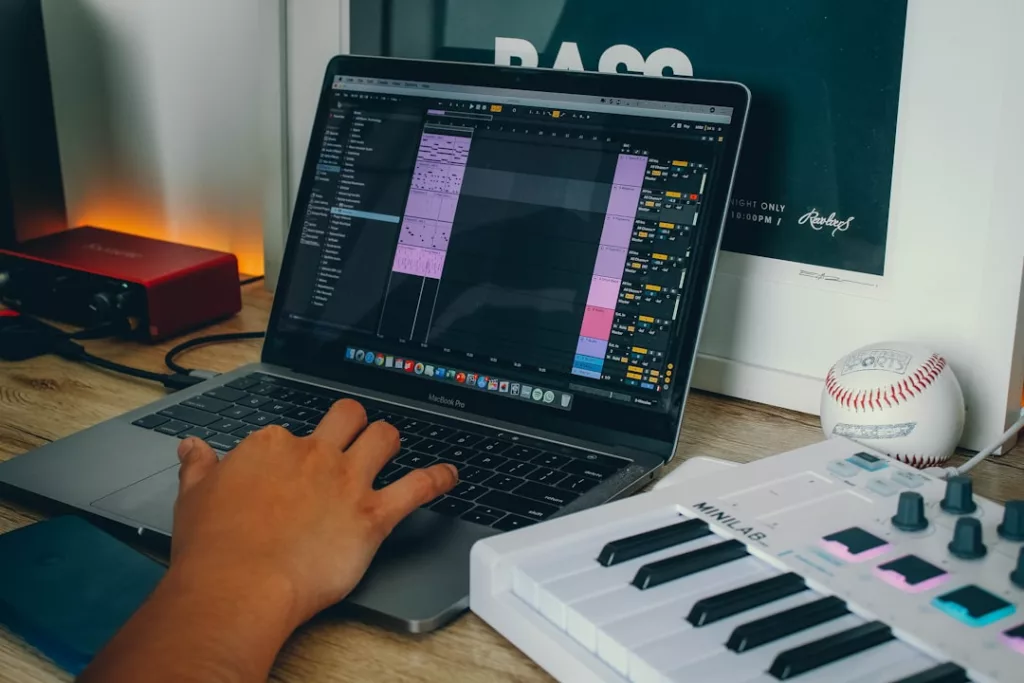
- Real-time AI collaboration in DAWs. Several major digital audio workstations have integrated AI co-production features directly into the interface — not as plugins, but as native functionality. This has lowered the barrier to using AI in production significantly.
- AI-generated music on streaming platforms. Spotify, Apple Music, and others have introduced labeling systems for AI-generated or AI-assisted content. How listeners respond to those labels — and whether it affects streaming behavior — is still playing out.
- Sync licensing and AI music. The sync market has become a significant outlet for AI-assisted music, particularly for advertising and content creation. For independent artists, this is a real revenue opportunity — but it requires understanding what rights you hold over AI-assisted work.
- Playlist curation and AI. Some platforms are experimenting with fully AI-curated playlists. This makes the distinction between editorial playlists (curated by humans) and algorithmic playlists more important for artists to understand. At Orion Promotion, we work with real curators — not bots or fake playlists — because genuine editorial placement still carries weight with both listeners and the algorithm.
Conclusion
AI in music isn’t a future trend anymore — it’s the current reality. The artists who are navigating it well in 2026 are the ones who treat it as a tool with specific uses, not a solution to every creative or commercial problem. They’re using AI to move faster, experiment more, and understand their audience better. But they’re not outsourcing the parts of their music that make it theirs.
At Orion Promotion, part of the Orion Music Network alongside Orion Distribution — which operates in partnership with Warner Music Group — we help artists build real growth on Spotify and beyond. That means working with real curators, targeting the right audiences, and building a strategy that makes the algorithm work for you, not against you. Spotify growth comes from strategy, not just playlist placements — and that’s as true in 2026 as it’s ever been.
Explore more on the Orion Promotion Blog or visit our FAQ page if you have questions about promotion, distribution, or how to build a smarter release strategy.